If you’re considering bankruptcy, one of the first questions you may ask is:
“How long will bankruptcy stay on my credit report?”
It’s an important question because filing bankruptcy can have a significant impact on your credit history. However, the effect of bankruptcy on your finances is not necessarily permanent, and the length of time bankruptcy remains on your credit report depends on the type of bankruptcy you file.
For most consumers, the two most common types are Chapter 7 and Chapter 13 bankruptcy. While both can provide relief from overwhelming debt, they are very different types of bankruptcy and have different credit-reporting timelines.
How Long Does Chapter 7 Bankruptcy Stay on Your Credit Report?
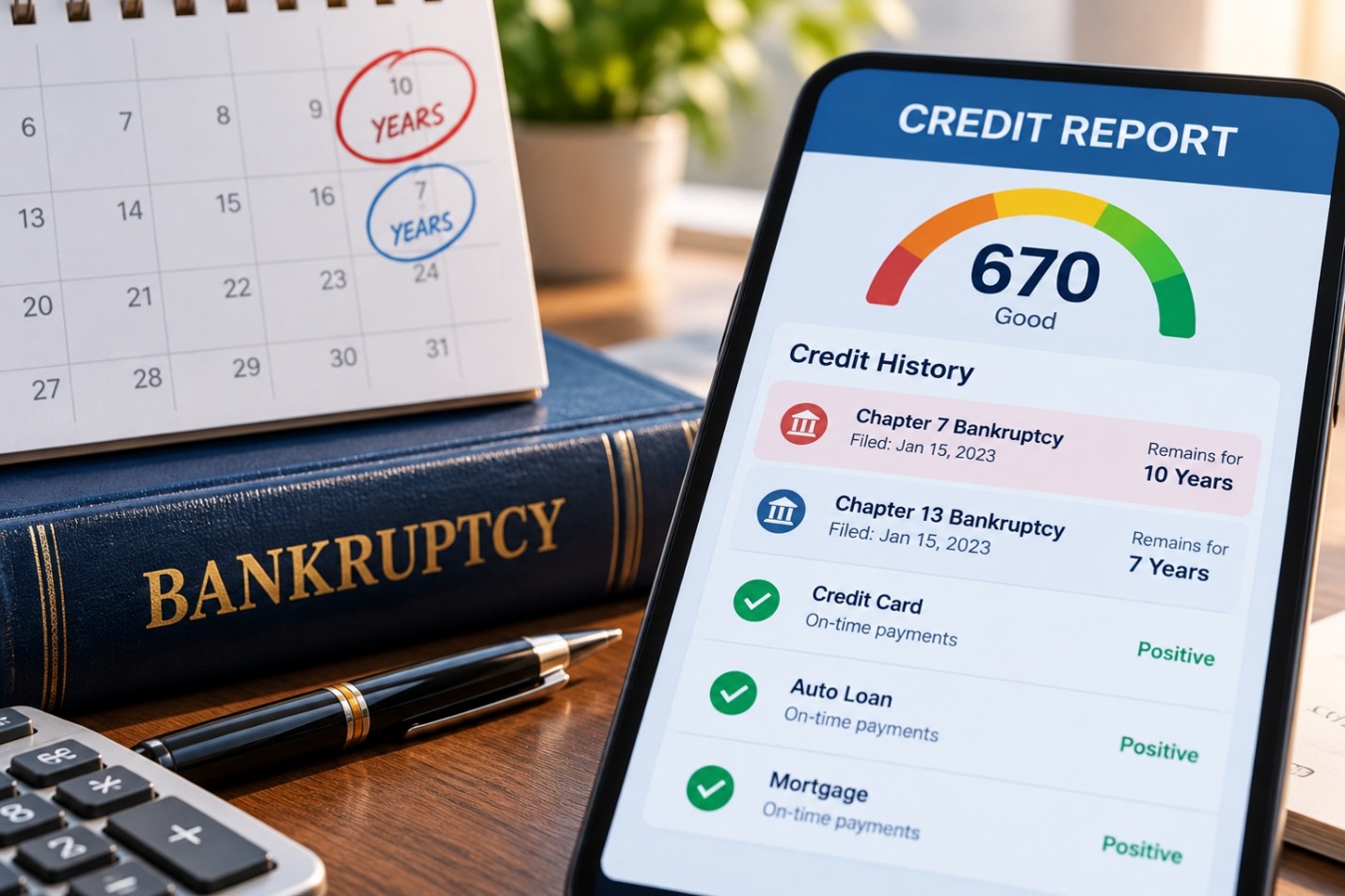
A Chapter 7 bankruptcy can remain on your credit report for up to 10 years from the date of filing.
Chapter 7 is sometimes referred to as a liquidation bankruptcy. In a Chapter 7 case, eligible debts may be discharged relatively quickly, allowing a person to move forward without many of the unsecured debts that were creating financial hardship.
Although the bankruptcy may remain on your credit report for up to a decade, that does not mean your credit score will remain damaged for 10 years.
Your credit score can begin improving well before the bankruptcy falls off your credit report.
How Long Does Chapter 13 Bankruptcy Stay on Your Credit Report?
A Chapter 13 bankruptcy generally remains on your credit report for up to seven years from the filing date.
Chapter 13 is commonly used by people who have regular income and want to repay some or all of their debts through a court-approved repayment plan.
A Chapter 13 plan generally lasts several years. After successfully completing the plan and receiving a discharge of eligible remaining debts, you may be in a much stronger financial position than you were when you initially filed.
Does Bankruptcy Ruin Your Credit for 7 or 10 Years?
No.
This is one of the biggest misconceptions about bankruptcy.
Although a bankruptcy can remain on your credit report for seven or ten years, depending on the chapter, the impact on your credit can change substantially over time.
Your credit history contains much more than the bankruptcy itself. As you establish a history of making payments on time, maintain manageable balances, and use credit responsibly, your credit profile can gradually improve.
For some people, bankruptcy is actually the first step toward rebuilding their financial life because it eliminates or restructures debts that made it difficult to keep up with monthly payments.
Can You Get Credit After Bankruptcy?
Yes.
Filing bankruptcy does not mean you will never qualify for credit again.
After bankruptcy, you may receive credit-card offers, automobile financing offers, or other opportunities to borrow money. However, interest rates and terms may not initially be favorable.
The key is to avoid using new credit to recreate the same financial problems that led to bankruptcy.
If you receive a credit card after bankruptcy, for example, consider using it only for purchases you can afford to pay off rather than treating the available credit as additional income.
Over time, responsible use of credit can help establish a stronger payment history.
How Can You Rebuild Your Credit After Bankruptcy?
There is no single strategy that works for everyone, but several basic steps can help.
1. Pay Every Bill on Time
Payment history is an important part of your credit profile. After bankruptcy, making your payments on time is especially important.
2. Keep Credit Card Balances Manageable
If you obtain a credit card after bankruptcy, try to keep the balance low relative to your available credit.
3. Don’t Apply for Too Much Credit at Once
Receiving multiple credit offers after bankruptcy can be tempting. Applying for numerous accounts in a short period, however, may not be the best strategy.
Focus on obtaining only the credit you actually need.
4. Review Your Credit Reports
Check your credit reports periodically to make sure that information is being reported accurately.
If a discharged debt continues to be reported incorrectly, you may need to dispute the information with the appropriate credit-reporting agency or creditor.
5. Create a Realistic Budget
Credit rebuilding is only one part of recovering financially.
Creating a budget, maintaining an emergency fund, and avoiding unnecessary debt can help you build a more stable financial future.
When Does the Bankruptcy Actually Come Off Your Credit Report?
The bankruptcy generally has a set reporting period, but that doesn’t mean you should wait until the bankruptcy disappears before applying for credit, buying a home, or making other financial decisions.
Lenders look at many factors when deciding whether to extend credit.
They may consider:
- Your current income
- Your employment history
- Your existing debts
- Your payment history after bankruptcy
- Your current credit score
- How much credit you are requesting
- The type of loan you are seeking
A bankruptcy filing is only one part of your overall financial picture.
Can Bankruptcy Help Your Credit in the Long Run?
This may sound surprising, but bankruptcy can sometimes put a person in a better position to rebuild credit over time.
Consider someone who is struggling with credit cards, medical bills, personal loans, and collection accounts. If the person cannot make the required payments, those negative accounts can continue damaging their credit while the debt continues to grow.
Bankruptcy may allow the person to discharge qualifying debts and create a clean starting point for rebuilding.
That does not make bankruptcy the right choice for everyone. It does mean that the decision should be based on your entire financial situation rather than simply asking how long the bankruptcy will appear on your credit report.
Does Bankruptcy Prevent You from Buying a House?
Not necessarily.
A bankruptcy can make obtaining a mortgage more difficult, particularly shortly after filing. However, bankruptcy does not permanently prevent someone from becoming a homeowner.
Mortgage lenders have their own qualification requirements, and waiting periods can vary depending on the type of loan and the circumstances surrounding the bankruptcy.
The most important consideration is often what happens financially after the bankruptcy.
Maintaining stable income, rebuilding credit, saving money, and managing debt responsibly can all help put you in a stronger position when you are eventually ready to apply for a mortgage.
The Bottom Line
So, how long does bankruptcy stay on your credit report?
- Chapter 7: Generally, up to 10 years from the filing date.
- Chapter 13: Generally, up to 7 years from the filing date.
But the number of years a bankruptcy can appear on your credit report should not be the only factor you consider when deciding whether bankruptcy is right for you.
For someone struggling with overwhelming debt, bankruptcy may provide an opportunity to eliminate or restructure qualifying debts and begin rebuilding financially.
If you are considering bankruptcy in Maryland, the Law Offices of Adam M. Freiman, P.C. can help you understand how Chapter 7 and Chapter 13 may apply to your individual circumstances. An experienced bankruptcy attorney can review your debts, income, assets, and financial goals and explain the options available to you.
Don’t let the fear of a seven- or ten-year credit-reporting period keep you from learning about your options. Understanding what bankruptcy can – and cannot – do for your financial future is the first step toward making an informed decision.
This article is intended for general informational purposes only and does not constitute legal advice. Bankruptcy and credit-reporting laws can be complex, and individual circumstances vary. Consult Adam Freiman, a qualified bankruptcy attorney, regarding your specific situation.